Design Principal | Designer | Experience Fanatic

Connecting UX

Modular UX
Case study

Connecting UX

Imagine a modular UX system that enables users to effectively perform their jobs, all within a seamless, integrated environment. This system should allow professionals to focus on their core responsibilities without needing to divert their attention to tangential tasks.

We have an opportunity to build composable, scalable experiences, unhindered by siloed teams and architectures that will enable a user to stay on task and effectively do their job.

Problem

Product teams are under constant pressure to deliver unique, high-quality products at an accelerated pace while maintaining consistency and reliability; all to stay ahead of the competition. 

Yet, these same teams are siloed within their disparate products, unable to share development resources or front-end code, which leads to duplicate, inconsistent, and truncated experiences.
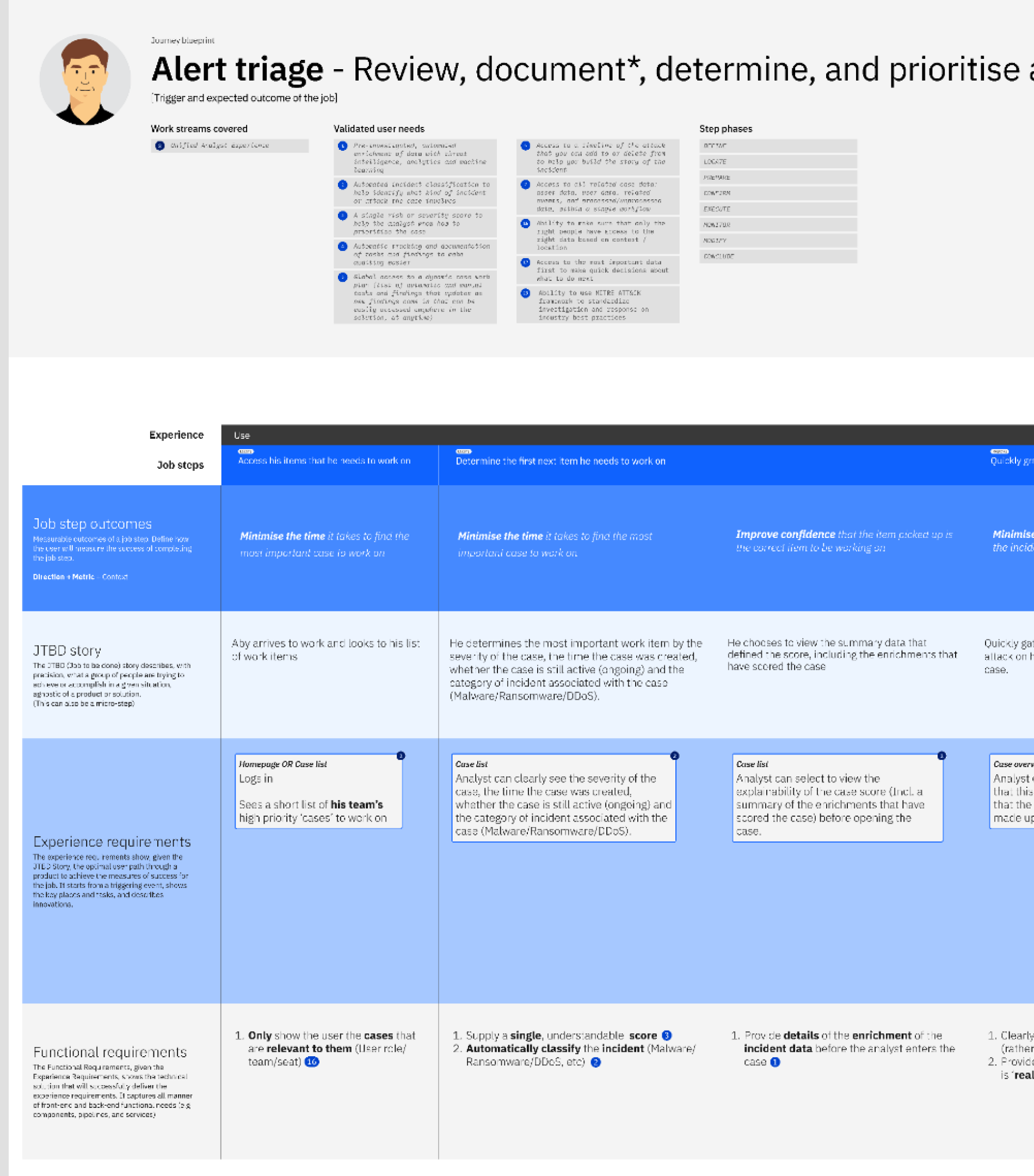
Journey blueprint showing a breakdown of a JTBD.
I created a Figma template for our designers that breaks down a JTBD into Job steps, user outcomes, requirements (experience, functional, and non-functional) and combines that with a journey map tying everything back to user needs and roadmap items.

Start with the job

One of the most effective ways to connect user experience with meaningful outcomes is through the Jobs-to-be-Done (JTBD) framework. Instead of focusing solely on features or demographics, JTBD asks a simple question: what is the user really trying to accomplish? By framing user needs as “jobs” that people hire a product to do, product teams can uncover deeper motivations and design solutions that feel intuitive and purposeful. This leads to more strategic prioritization, clearer alignment across teams, and ultimately products that resonate with users on a functional and emotional level. For the end user, it means fewer frustrations, less cognitive load, and an experience that feels like it was built specifically for them—because, in essence, it was.

However, many platforms struggle to bridge these insights into execution. Instead of connecting capabilities to serve the holistic job a user is trying to complete, they silo features into disjointed offerings. Users are left to navigate fragmented workflows, stitching together tools that don’t quite speak to each other. This disconnection creates unnecessary friction and erodes the seamlessness that makes digital experiences powerful. A more thoughtful approach is to connect capabilities around real user jobs, ensuring every feature works in service of the whole experience rather than existing as an isolated function.

The problem with silos

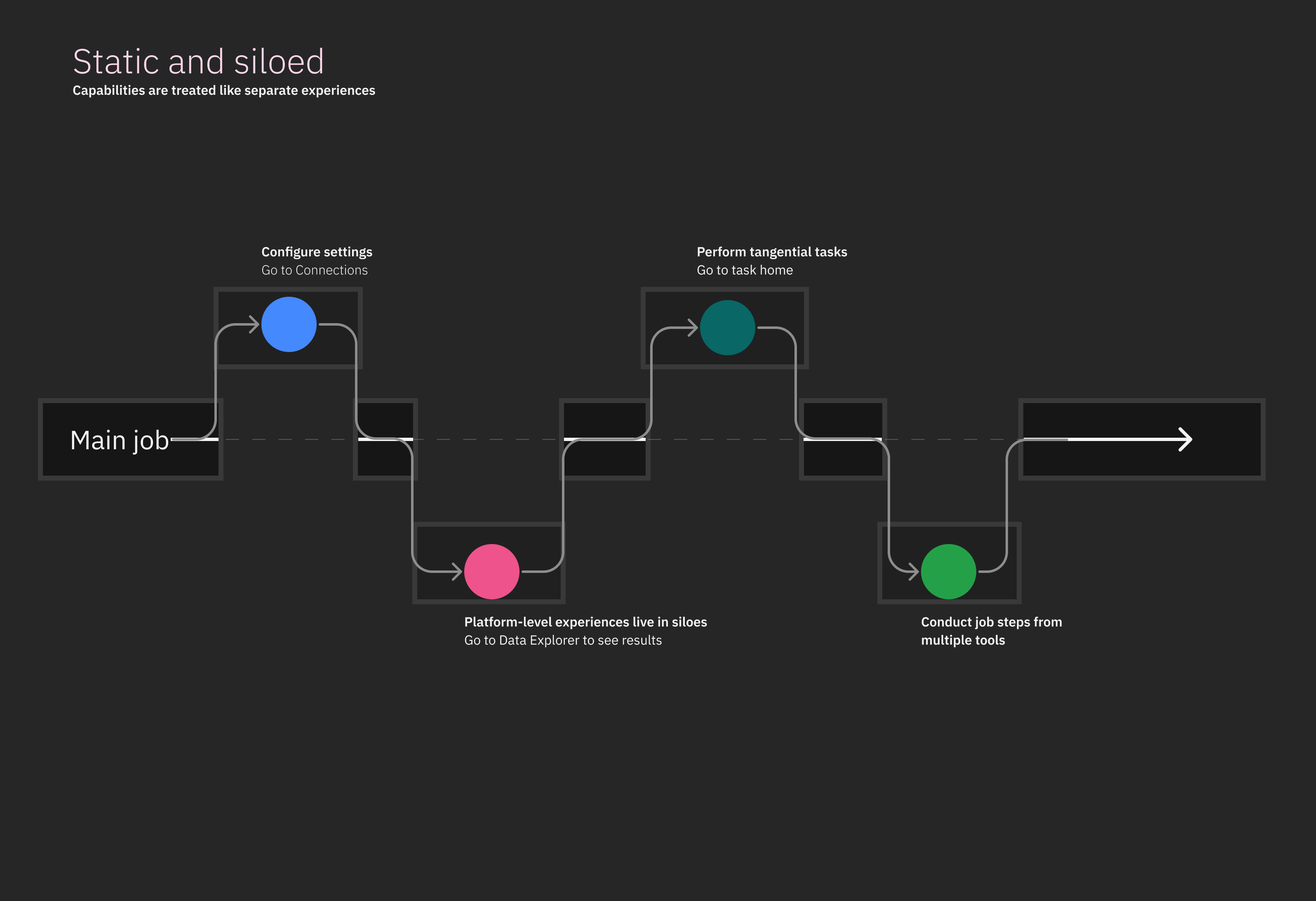
In the context of a user’s Job-to-be-done, you can understand how disjointed of an experience it actually is when users are forced to navigate through a number of interfaces… sometimes requiring them to go to multiple tools and applications. 

Also, poor integration of third-party capabilities often contributes to a fragmented user experience​. 

Modular UX strategy

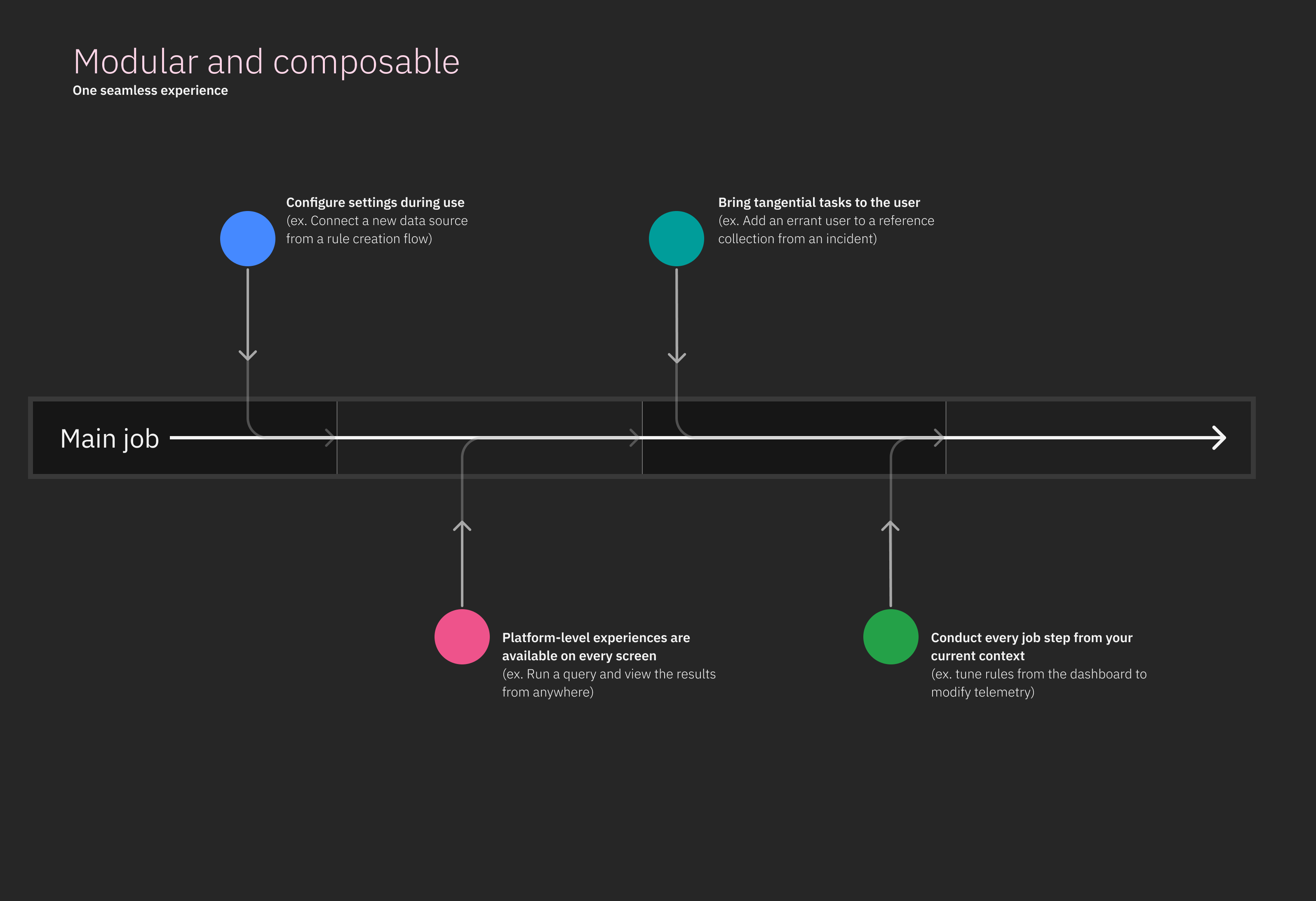
Enable users to perform all the necessary steps of a job while ensuring access to all available intelligence and capabilities within the context of the job they are performing.

Break down the silos

In an ideal world, users should be able to perform an entire job without having to switch contexts multiple times by navigating away from the job at hand. The experience should be truly seamless and tangential tasks should be integrated into the JTBD. 

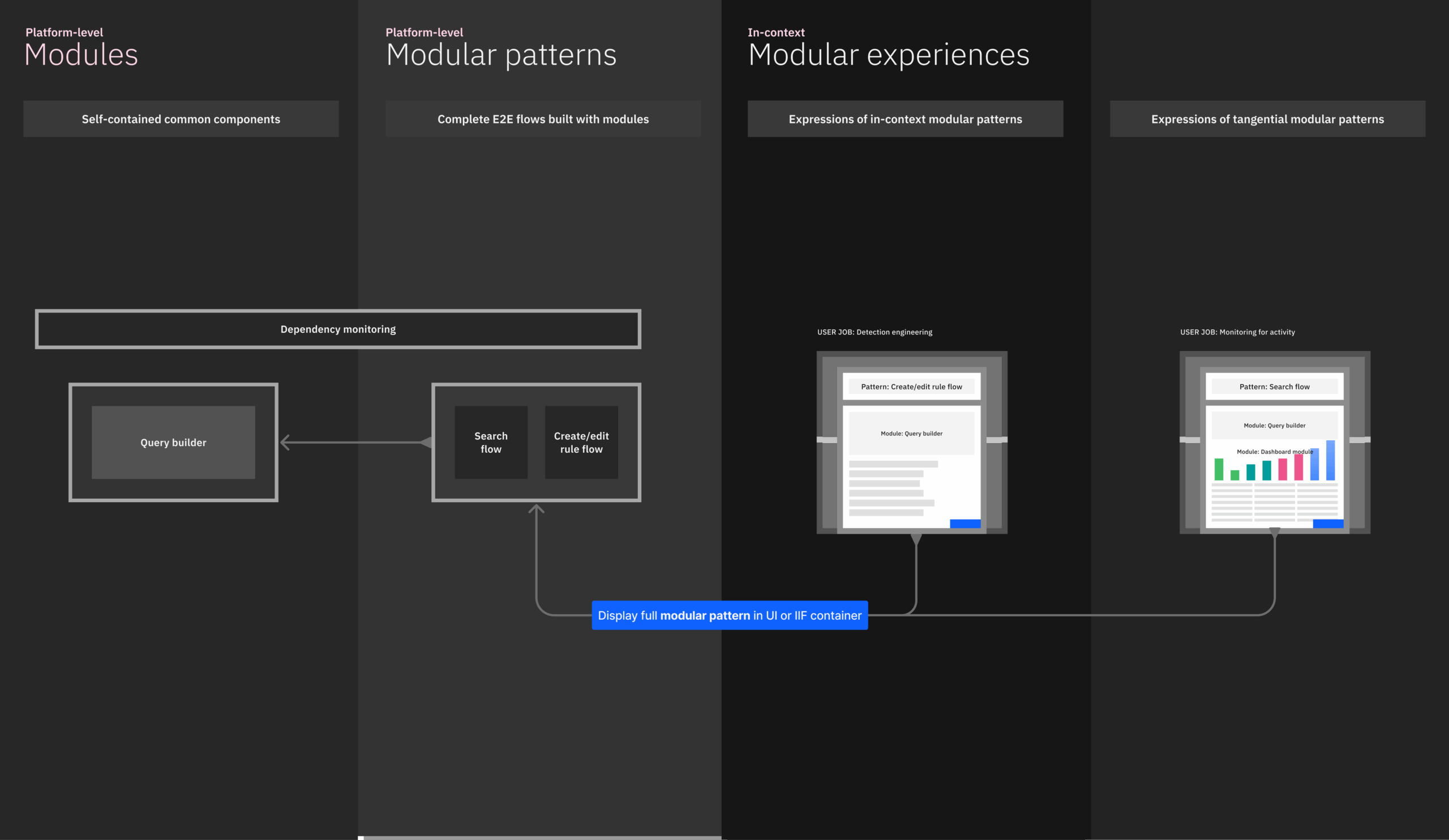
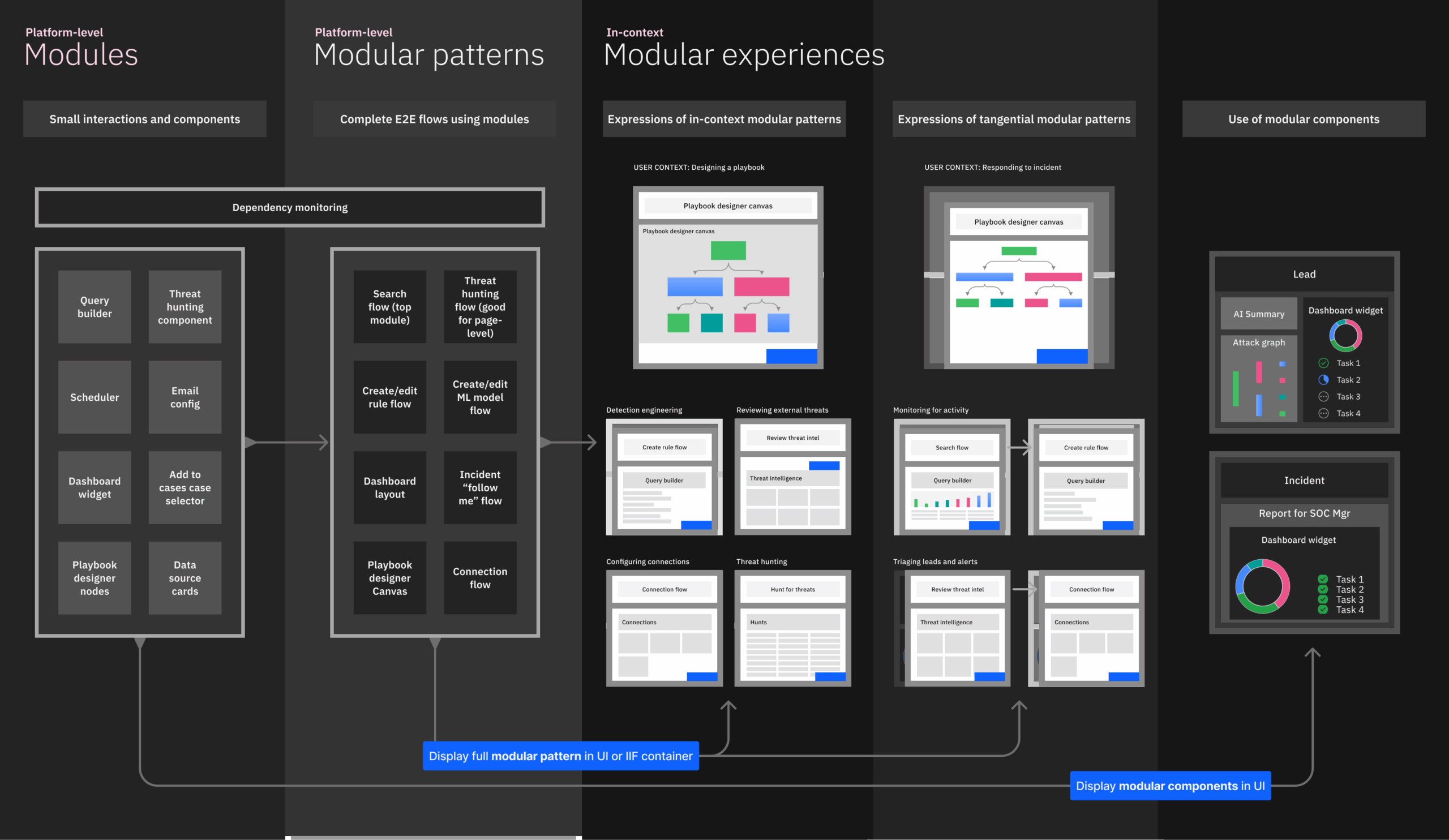
A modular user experience relies on a repository of available composable modules and modular patterns that can be delivered to the user via UI vehicles like modals, screen takeovers, and side panels.

Impact

This work is directly impacting the way IBM approaches UX design for platforms.

It has the potential to improve cross-platform capability adoption and mean time to job completion.

Anticipate > 50% increase in user satisfaction.

Hide